Machu Picchu by Train
The day trip works — thousands do it — but it starts at five and ends at ten, and the entrance sells by capped circuit weeks ahead. Book first, choose Circuit 2 for the postcard, and know the overnight is still the upgrade.
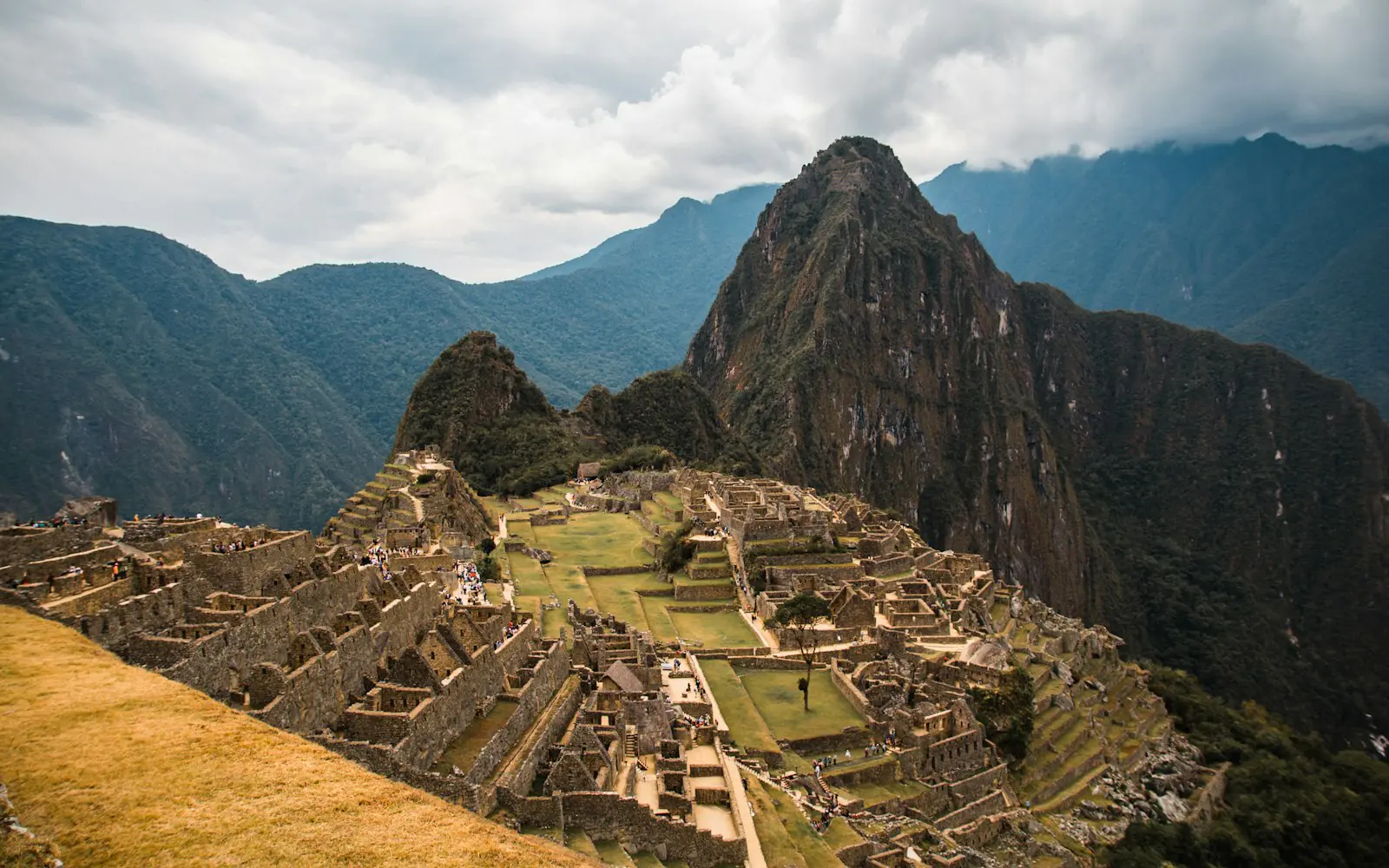
The short version
- Entry runs on the official circuit system — three main circuits across ten route variants, with daily caps around 4,500–5,600 and roughly a thousand held for in-person sale — booked weeks ahead in season at tuboleto.cultura.pe, the government’s own portal and the only seller that isn’t a markup.
- Circuit 2 is the alarm’s pick for first visits: the upper-terrace classic panorama plus the fullest walk through the urban sector — the other circuits trade coverage for specific angles or the mountain-climb add-ons.
- The day-trip assembly: colectivo or car Cusco to Ollantaytambo (~1.5–2 h), the valley train to Aguas Calientes (~1.5 h, booked ahead at perurail.com or its competitor), and the switchback shuttle bus to the gate (~25 min) — the same chain in reverse gets you home by ten.
- Passports are checked against tickets at the entrance — carry the physical document, per the alarm, and collect the novelty stamp on exit if the desk is staffed.
- Huayna Picchu and Machu Picchu Mountain climbs sell as separate limited add-on tickets with their own daily caps and time windows — vertigo and fitness honestly considered before booking.
- Timed entries flow one-way through the site with re-entry restricted — bathrooms and snacks live outside the gate, guides hire at it (encouraged, not enforced), and the three-to-four-hour circuit is the whole visit by design.

Getting there
The 5am start is the architecture: the Sacred Valley road to Ollantaytambo in the dark, the train window turning on as the Urubamba gorge narrows from farmland to cloud-forest walls — the ride is genuinely part of the visit — and the bus queue at Aguas Calientes moving faster than it looks. Train classes range from adequate to absurd; the mid-tier windows are the same Andes. Book every leg before you leave Cusco: entrance first (it’s the scarce one), train second, bus tickets at the Aguas Calientes booth or ahead. The Inca Trail and its permits are a different, months-ahead product entirely — this page is the train day, and February closes the trail but not the site.
The visit
Enter at your slot with the circuit doing the choreography: Circuit 2 climbs first to the upper agricultural terraces where the full city composes below — the photograph, banked early, cloud permitting (and clouds burn off; patience beats panic). Then the descent into the urban sector: the Temple of the Sun’s curved masonry, the quarry, the Intihuatana’s carved sightlines, the residential blocks’ trapezoid doors, and the Temple of the Condor closing the loop. Llamas work the terraces on their own schedule. Three hours covers the circuit unhurried; guides at the gate add the archaeology’s arguments for those who want them narrated. Exit is one-way and final — hence the pre-visit bathroom stop and the water in your daypack (big bags check at the gate). The bus down, a late almuerzo in Aguas Calientes, and the train’s evening run complete the alarm’s ten p.m. arithmetic.
When to go
April through October is the dry season — clear mornings, cold starts, full crowds; June–August peaks everything including the weeks-ahead booking pressure. November through March runs green and wet with afternoon rains, thinner crowds, and February as the wettest month (the Inca Trail closes then; the site and trains run on). Sunrise slots sell hardest and deliver fog as often as glory — the mid-morning entries after the mist lifts are the quiet smart money. Whatever the month, the alarm’s sequence holds: entrance booked first, everything else built around it.
Frequently Asked Questions
Is the day trip from Cusco actually worth doing?
Yes, with eyes open — it’s a seventeen-hour day for three-to-four on site, and the site repays it. The Aguas Calientes overnight (or a Sacred Valley base at Ollantaytambo) converts the same visit into a rested one with a shot at the quiet first hours; the alarm’s upgrade clause is standing advice, not fine print.
Which circuit should I really choose?
Circuit 2 for a first visit, full stop — panorama plus coverage. Circuit 1 serves the pure postcard with less walking; Circuit 3 runs the lower city for return visitors and the mountain-ticket holders. The add-on climbs (Huayna Picchu’s exposure especially) suit the surefooted who booked well ahead.
Do I need a guide?
Officially encouraged and genuinely useful for a first visit — the stones argue better with narration — but not enforced at the gate; licensed guides hire there at posted-ish rates, solo entry happens daily. Audio-free wandering within the circuit’s flow is a legitimate choice.
What about the altitude?
Cusco at 3,400 meters is the acclimatization test; Machu Picchu at 2,430 is the mercy the alarm named. Spend your first Andean day taking Cusco slowly — the coca tea is tradition, hydration is the science — and the site itself will feel easier than the city did.
Sacred Valley stops on the way?
The road passes Chinchero and the valley’s markets, and Ollantaytambo’s own fortress ruins (documented on this network with the Sacred Valley) justify hours you don’t have on the day-trip clock. The honest structure: Machu Picchu’s day for Machu Picchu, the valley’s day for the valley.