Cusco Day Tours
I’m Serious Day Tour Man AI, your day trip expert. Ask me anything — where to go, how to get there, and what’s actually worth your day.
Cusco requires the altitude conversation before the itinerary. The city sits at 3,400 meters — higher than Machu Picchu itself, a fact that surprises everyone and organizes everything — so the first 24 to 48 hours go to acclimatization, not ambition.
The week structures itself accordingly: the gentler Sacred Valley first, the citadel once you’ve adjusted, and Rainbow Mountain — at over 5,000 meters, the highest place most visitors will ever stand — last or not at all. The sorting below includes the Machu Picchu ticket system, which now runs on circuits and timed entries that reward planning and punish improvisation.
Here’s what’s worth a day, with real times and honest trade-offs.

Popular Day Trips
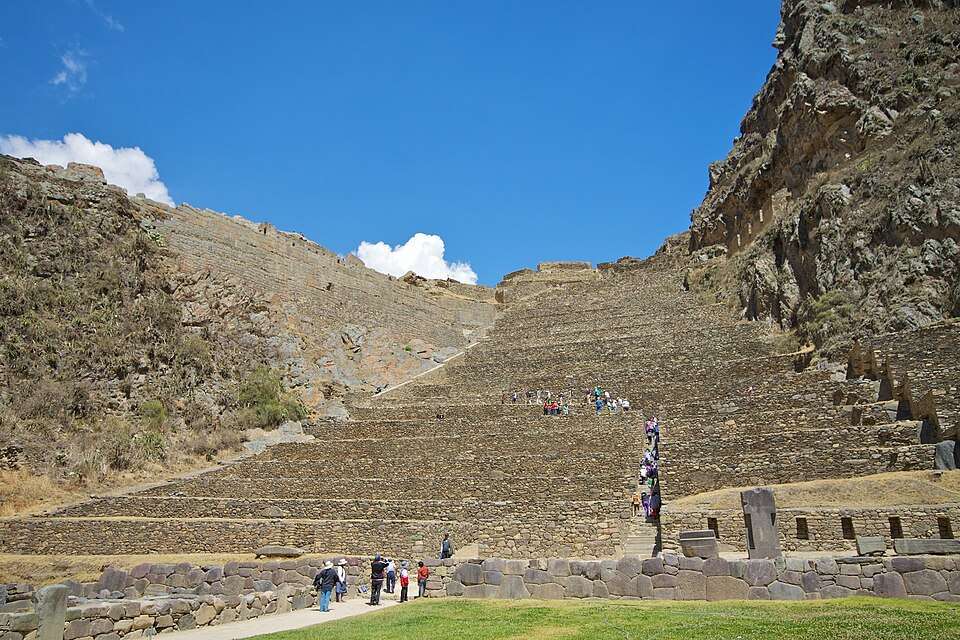
Sacred Valley
Pisac, Ollantaytambo
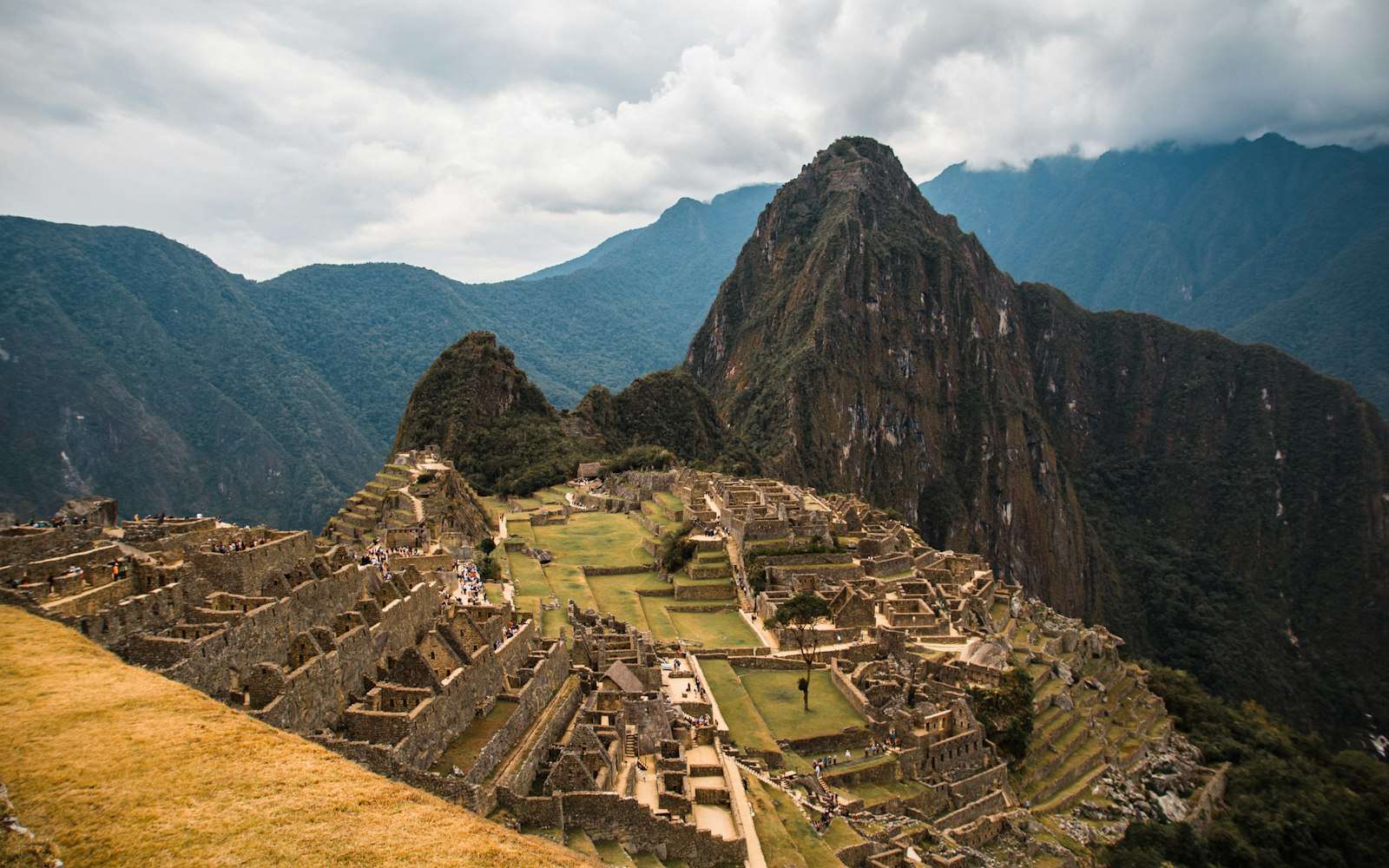
Machu Picchu
The Circuit Choice, the Five A.M. Truth
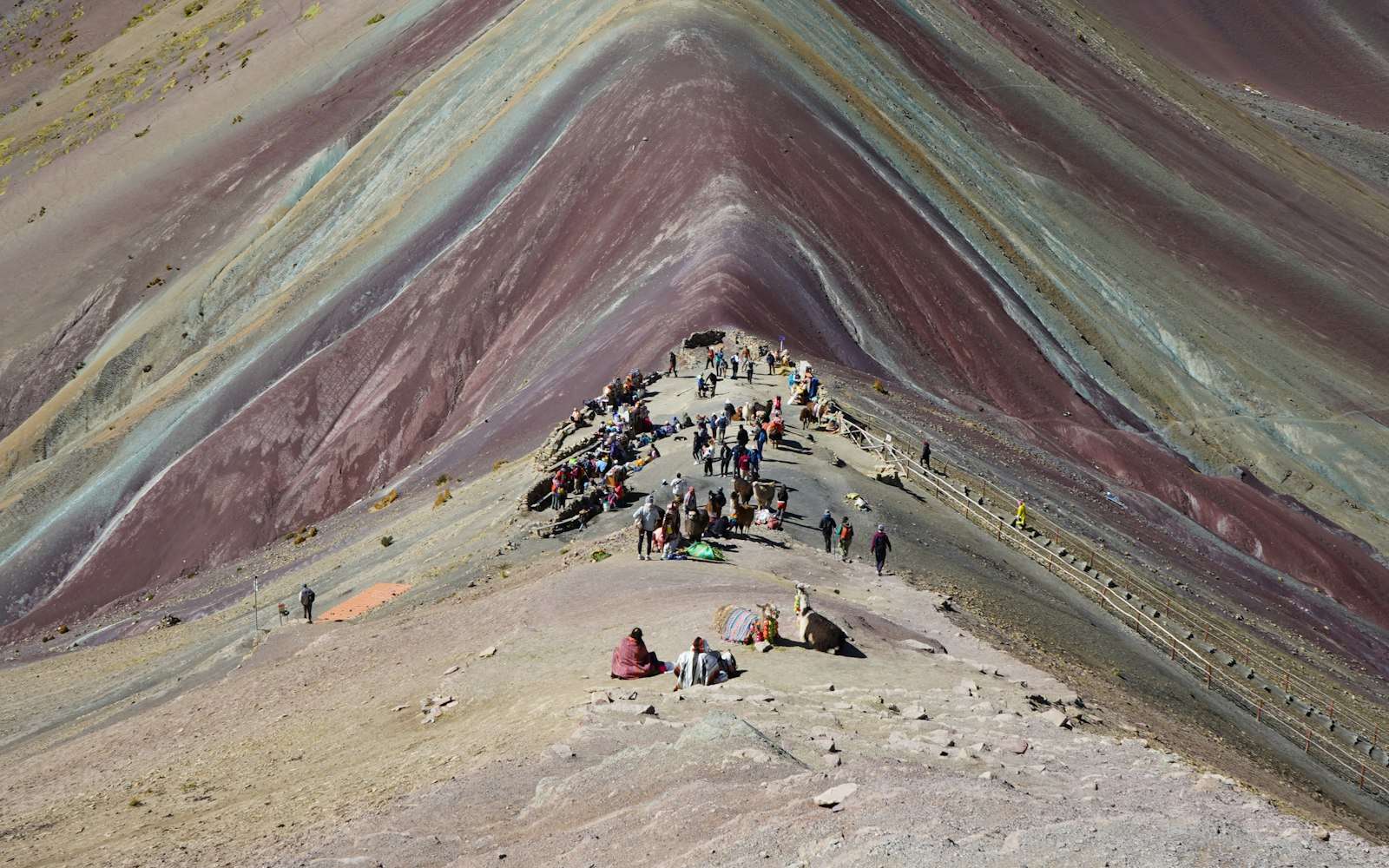
Rainbow Mountain
The Altitude That Doesn’t Negotiate, the 3 A.M. Start
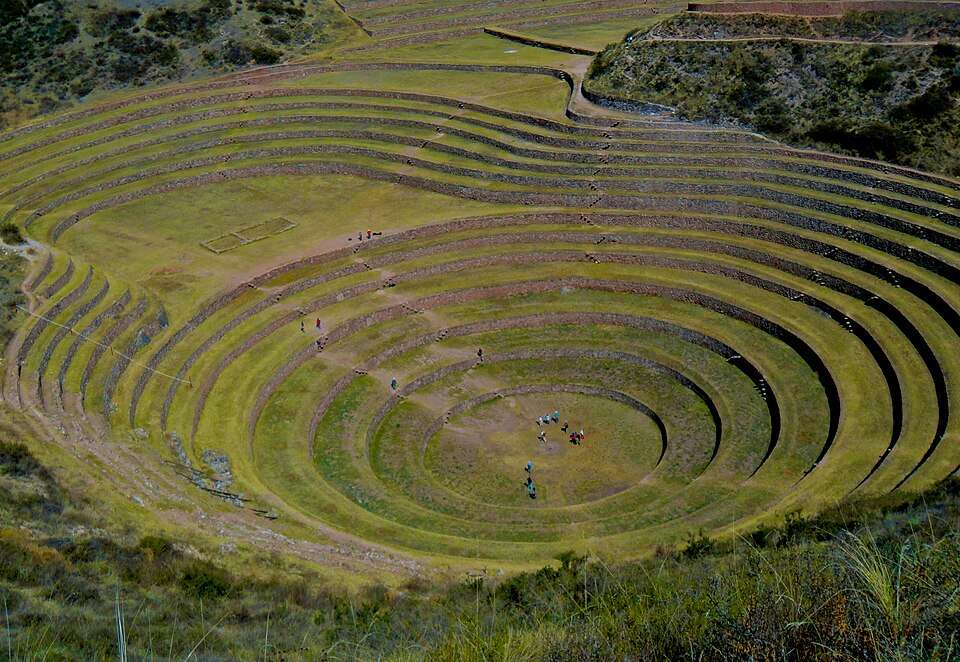
Moray & Maras
The Rings That Run Cooler, Salt With Provenance
Machu Picchu — The Formats and the Tickets
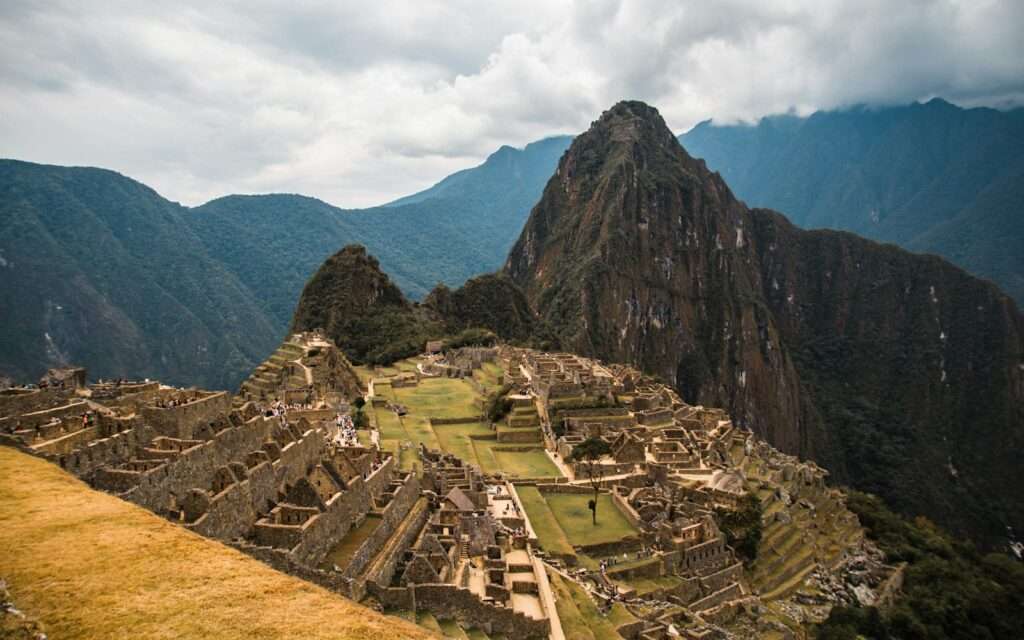
Sort the reason everyone came by format. The day trip from Cusco runs train-based — Ollantaytambo or Poroy to Aguas Calientes, then the switchback bus up — at twelve-plus hours door to door. It’s genuinely viable, long, and the standard product. The overnight in Aguas Calientes buys the first-bus dawn entry that beats both the day-trip wave and the afternoon clouds, and it’s the honest upgrade.
Now the tickets, because the system dictates the visit. Sales run exclusively through the Ministry of Culture’s official platform. Entry works on timed hourly slots and defined circuits — three circuits, ten routes — and the circuit you buy is the visit you get, with no roaming between routes. Circuit 2 is the classic: the postcard view plus the citadel’s core, and it sells out first, sometimes months ahead in season. Circuit 1 is panoramic terraces only, without the urban core; Circuit 3 covers the lower royal sector, and its 3-A route carries the Huayna Picchu climb — the famous, vertiginous one, capped and gone earliest of all. Daily capacity runs 4,500 in regular season and 5,600 on peak dates, with 1,000 next-day tickets sold in person at the Aguas Calientes cultural center — the last-resort line that forms early.
Three rules govern entry: tickets are nominative, so your passport gets checked at the gate. Arrive inside your slot — the grace period is short, and the mountain routes have none. Guides are recommended rather than mandatory, and worth it regardless. There’s no re-entry on standard tickets, so plan accordingly. The verdict: it is worth everything, and the planning is the price.
Read the full Machu Picchu day-trip page.
The Sacred Valley — The Acclimatization Day That Isn’t a Compromise
Here’s the first-days answer: the Sacred Valley runs lower than Cusco — Pisac at 2,970 meters, Ollantaytambo at 2,790 — which makes the classic valley circuit the acclimatization day that happens to be world-class.
Pisac’s terraced citadel spills down its ridge, and the ruins outrank the famous market, which has traded authenticity for scale. See the ruins first, the market briefly. Ollantaytambo is the living Inca town: its grid, canals, and terraces still function, the fortress terraces supply the day’s climb, and the town itself is the substance. It also doubles as the Machu Picchu railhead, which makes an overnight here the connoisseur’s staging move. Chinchero’s weaving cooperatives close the loop — the dye-and-spin demonstration, with cochineal reds crushed from insects before your eyes, is the genuine article when the cooperative is community-run.
The structure: the standard tour compresses all three plus lunch into one long day; the two-day version breathes. The boleto turístico — the multi-site ticket covering Pisac, Ollantaytambo, and more — is effectively mandatory and sold at the first gate you reach.
Read the full Sacred Valley day-trip page.
Rainbow Mountain — The 5,000-Meter Question
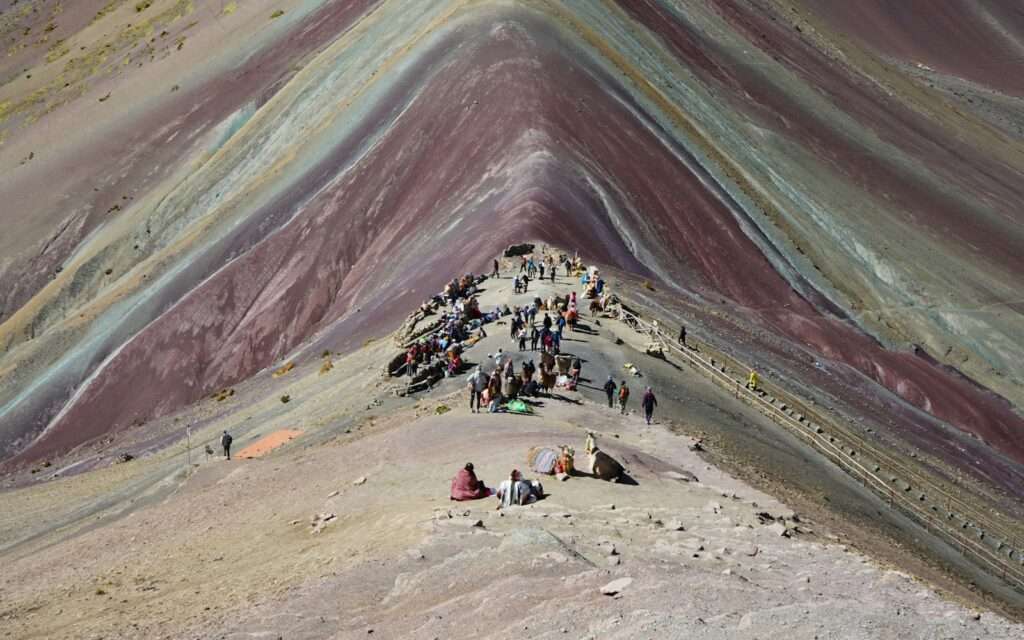
Vinicunca, the mineral-striped mountain, sits two-plus hours’ drive south, followed by a hike to a viewpoint above 5,000 meters. The banded reds and turquoises are real; the saturation on the feeds is not, and overcast days mute the colors further.
State the cost plainly: the altitude is severe. This is a final-days trip after full acclimatization, never a day-two ambition. Horses are for rent along the trail because visitors reliably overestimate themselves, and the better tours carry oxygen.
The crowd math: standard tours arrive together mid-morning, so the 3 a.m.-departure early versions get the ridge to themselves. And there’s an alternative worth naming — Palccoyo, the “other” rainbow mountain, trades some drama for a far gentler walk and a fraction of the crowd. It’s the honest answer for anyone unsure of their altitude legs.
Weather rules absolutely; the ridge in snow or fog shows you nothing, and the wet season (December–March) muddies both the trail and the odds. Spectacular, earned, and the least forgiving trip in the region — respect the order of operations.
Read the full Rainbow Mountain day-trip page.
Maras & Moray — The Half-Day Pair
The valley’s connoisseur combination pairs two sites twenty minutes apart.
Moray is the set of concentric circular terraces descending into a natural sinkhole like an amphitheater — most plausibly an Inca agricultural laboratory, since the temperature difference between the top and bottom rings spans several degrees, which guides demonstrate with relish.
The Salineras de Maras are three thousand salt pans terracing down a hillside, fed by a single saline spring and worked by local families since pre-Inca times. The white-and-ochre honeycomb is the region’s most photogenic human landscape. The rules of respect: walkways now keep visitors off the pans, because the salt is the families’ livelihood. Buying pink salt at the source is the correct souvenir economy, and afternoon light favors the pans.
The format: a half-day tour from Cusco or the valley, with quad-bike and horseback versions across the plateau for the active. This is the low-effort, high-reward day that slots anywhere in the acclimatization order — which makes it the ideal day two.
Read the full Moray & Maras day-trip page.
The South Valley — The Sleeper Circuit
The coaches skip this direction, which is the argument for it. The south valley road toward Puno stacks three sites into the region’s least-crowded archaeology day.
Tipón is the water temple whose monumental channels and fountains still run — Inca hydraulic engineering at its most intact, and for the engineering-minded the equal of anything at the famous sites. Pikillacta is the vast pre-Inca Wari city whose grid of two-story walls reframes the region’s history as far deeper than the Incas; good guides build the day on that point. Andahuaylillas is the village church called the “Sistine Chapel of the Americas” for its floor-to-ceiling baroque interior — the gold-and-mural excess lands harder for the adobe modesty outside.
Add lunch in Tipón village, the region’s roast-cuy capital — guinea pig is the regional delicacy, ordered knowingly or skipped without judgment. The circuit costs a fraction of the north-valley day, requires the boleto turístico’s south module, and rewards second visits and longer stays.
The Altitude Rules, the Boleto & Cusco Itself
Physiology first, because it governs everything. Cusco’s 3,400 meters enforce the rules: keep the first 24–48 hours gentle — the flight-in day is for plazas, coca tea, and naps, not ruins. Double the water, halve the alcohol. Coca tea and mate de muña are the local remedies; they help, and they are not magic. Symptoms that ignore rest and water mean descend — the Sacred Valley is lower, which makes it the medicine. And the order of operations, restated: valley first, Machu Picchu second, Rainbow Mountain last.
The city around the rules: Qorikancha, the Sun Temple whose Inca masonry the conquistadors built their church directly onto — the join between the two empires is visible in the walls, and no other wall in the Americas says as much. The Plaza de Armas and cathedral, Sacsayhuamán’s megalithic zigzag walls above the city — the boleto covers it, and the fit of the stones is the thing photographs can’t convey — and the San Blas artisan quarter’s climb.
The rest: San Pedro market for the eating truth — juice ladies, soup counters at worker prices, bags worn in front. The eating curriculum runs from cuy and alpaca, ordered by temperament, through the novoandina cooking that has made Cusco a genuine food city. Inti Raymi (June 24) is the Inca-scale festival with the usual festival rule: attend deliberately or schedule around it. The season math: the dry season (May–September) is the trekking-and-postcard window, with peak crowds and cold nights. The shoulder months trade some rain for room. And February closes the Inca Trail for maintenance every year — the single fact that reroutes more itineraries than any other.
Frequently Asked Questions
How do you acclimatize for Cusco?
Gently — the city sits at 3,400 meters, higher than Machu Picchu. First two days: plazas, coca tea, and the lower Sacred Valley. Rainbow Mountain waits until last, and symptoms that ignore rest mean descend.
How far ahead should you book Machu Picchu?
Weeks to months in season — sales run only on the official Ministry of Culture platform, entry works on timed circuits that dictate what you see, and Circuit 2 (the classic) plus the Huayna Picchu permits sell out first. A 1,000-ticket next-day allotment is sold in person at Aguas Calientes as the last resort.
Is Rainbow Mountain worth it?
At full acclimatization, with an early-departure tour and clear weather — yes, and it’s severe: over 5,000 meters. Palccoyo is the gentler, quieter alternative for uncertain legs.
What is the boleto turístico?
The multi-site ticket covering Pisac, Ollantaytambo, Sacsayhuamán, and more — effectively mandatory for the valley circuits, sold at the first gate, with a south-valley module for the sleeper sites.
Should you stay overnight at Aguas Calientes?
If you can — the first buses up beat the day-trip wave and the clouds, and dawn at the citadel is the version people cross the world for. The Cusco day trip works; the overnight transforms it.